
Stop Optimizing and Start Disappearing
Intrinsic experimentation, "I Am Here" days, disappearing into creative flow states, getting clear on your needs, and leaning into the numbness.

Yesterday, I practiced improvisational creativity without even realizing it. The weather was too delicious to stay inside, so I went on a walk in Overton Park. It was bursting with life. I veered deeper into the forest's inner trails and spotted vivid purple flowers bathing in the light peeking through the trees. Without thinking, I bent down to pick a bundle of them. I felt an energy telling me to keep looking, to make a bouquet of wildflowers.
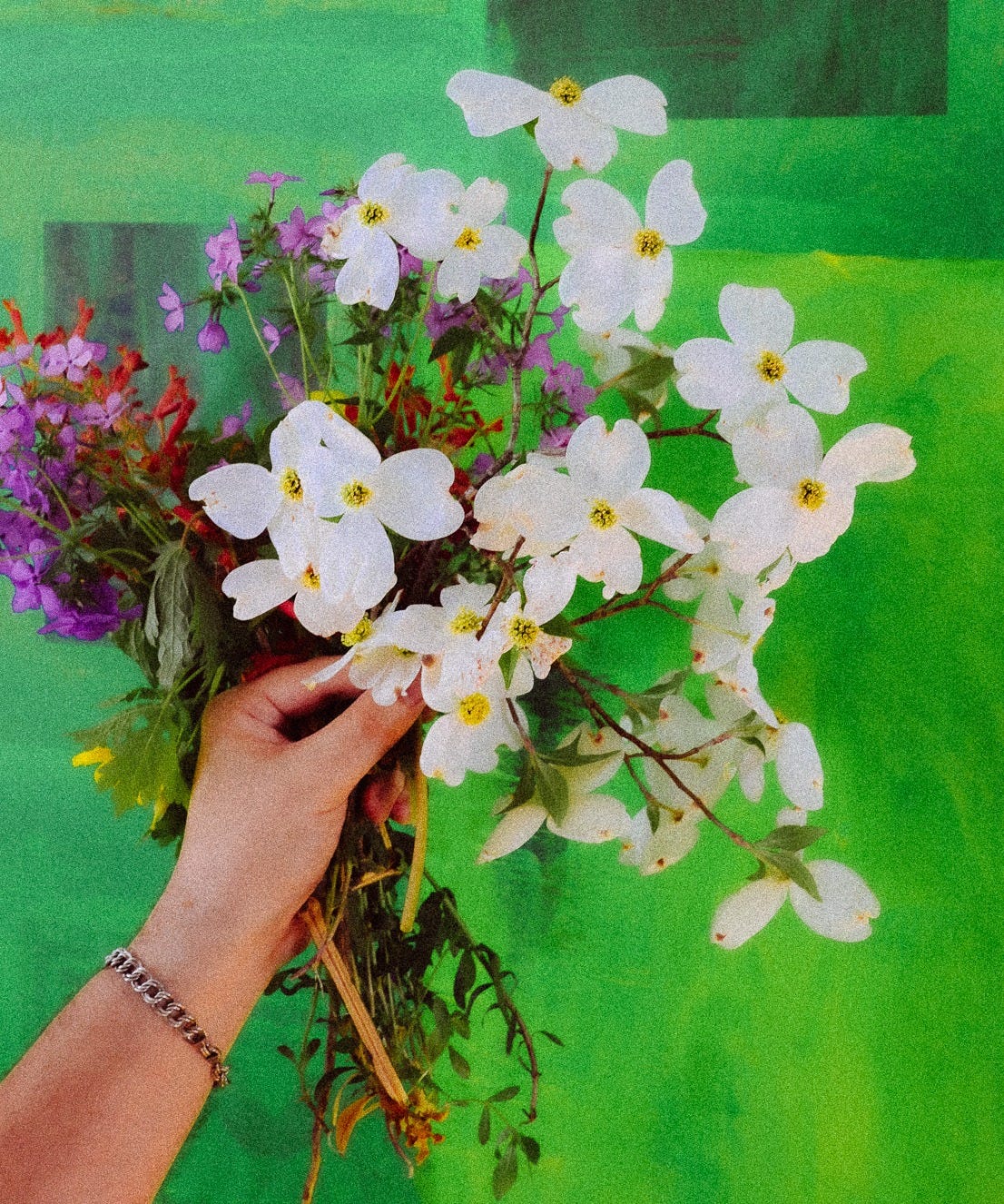
I found yellow flowers. I collected a bundle of maroon, tube-like flora. I picked dandelions. I plucked flowers from dogwood trees (and got paranoid that it might be illegal).
Satisfied with my bouquet, I started the trek back to my apartment when I was stopped by a man getting out of a suped-up truck, panic on his face.
“Where did you get those? I need those.” Eyes wide.
“I found them in the trails. There’s a bunch out there.”
“Because I really need those,” he said. “I really fucked up.”
I should have asked what he fucked up, but I assumed it had to do with relationship strife. I imagined him out there, all the wrongs swirling in his head, thinking, “I hope she forgives me.”
I kept walking. An idea struck me as they tend to do when I’m walking (especially without my phone or no plan). I would use the bouquet as a prop for experimental self-portraits. I had some time to kill before my friend got back from a baby shower. I’ve been taking a lot of portraits lately, and I wanted to turn the camera on myself. I wanted to do something editorial, to mess around with editing, to bring out colors that hide in the shadows, to celebrate spring. I wanted to celebrate a milestone (more on that in a later post).


During the photoshoot, I entered a flow state. I tried new angles. I felt excitement.
This giddiness intensified as I began editing the photos in Lightroom, playing with odd crops. I toyed with the color and effect sliders. I figured out a new technique to make photos look dreamier.
It was pure, intrinsic creativity. It felt like when I was creating in my youth, just for fun. Trying new things and not knowing what the outcome would be. There was no outcome.
It was all for the love of experimenting.
In this week’s Creative Wellness Research Log Entry, I will talk about:
The benefits of “I Am Here” days (Community)
How to disappear into a flow state (Craft)
Examining your needs for creative flourishing (Clarity)
Feeling the numbness to help soften your body (Condition)
Be here now (just for one day, at least)
Code: COMMUNITY
Currently reading — “The Art of Gathering” by Priya Parker
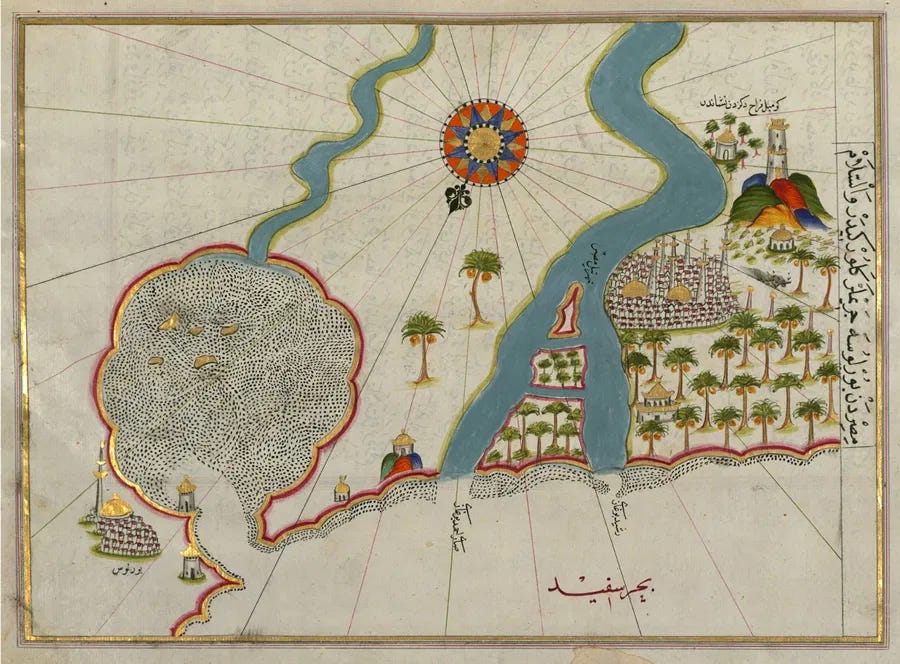
We all need a little more adventure with friends without our phones. We need to get out and explore and leave it up to fate. That’s how deeper memories are made. At least, that’s my theory.
In her book “The Art of Gathering,” professional facilitator Priya Parker writes about a gathering format she calls “I Am Here” Days. The format imposes a few constraints, so a group can be more present as they explore and discover parts of town they don’t normally visit.
The “I Am Here” Days started with just two people, but as they grew into group expeditions, a few guidelines were put in place to ensure people got the full experience. The two main rules: they were going to spend a full day together without technology.
Here are the rules Parker laid out:
If you’re going to join an “I Am Here” day, be there from start to finish (all 10-12 hours)
Turn off technology (unless it directly relates to the day).
Agree to be present and engaged in the group and what’s going on.
One conversation at meals.
Be game for anything.
Parker says, “We tend to associate rules with formality and stiffness, but in our ‘I Am Here’ days we found that rules created intimacy.”
Parker’s friend, Bratunde Thurston, wrote this about their experience of the “I Am Here” Days:
It’s rare for groups of people to do things together for a sustained amount of time. We all carry with us the technical capacity to be anywhere, to check out of the present time or space. So the active choice to do ONE thing and do it with a fixed set of people is significant. Because of the rules, I could go deeper into the experience. I could observe something around me my phone would have caused me to miss.
Seems easy enough, right?
Creative Experiment to Try:
Schedule your own “I Am Here” day with a friend or a group of friends. Elect someone to curate the day’s events. Explore the art in a neighborhood you don’t normally visit. Come up with your own rules that facilitate total presence.
How to get into flow state by disappearing
Code: CRAFT
Currently reading — “Free Play: Improvisation in Life & Art” by Stephen Nachmanovitch
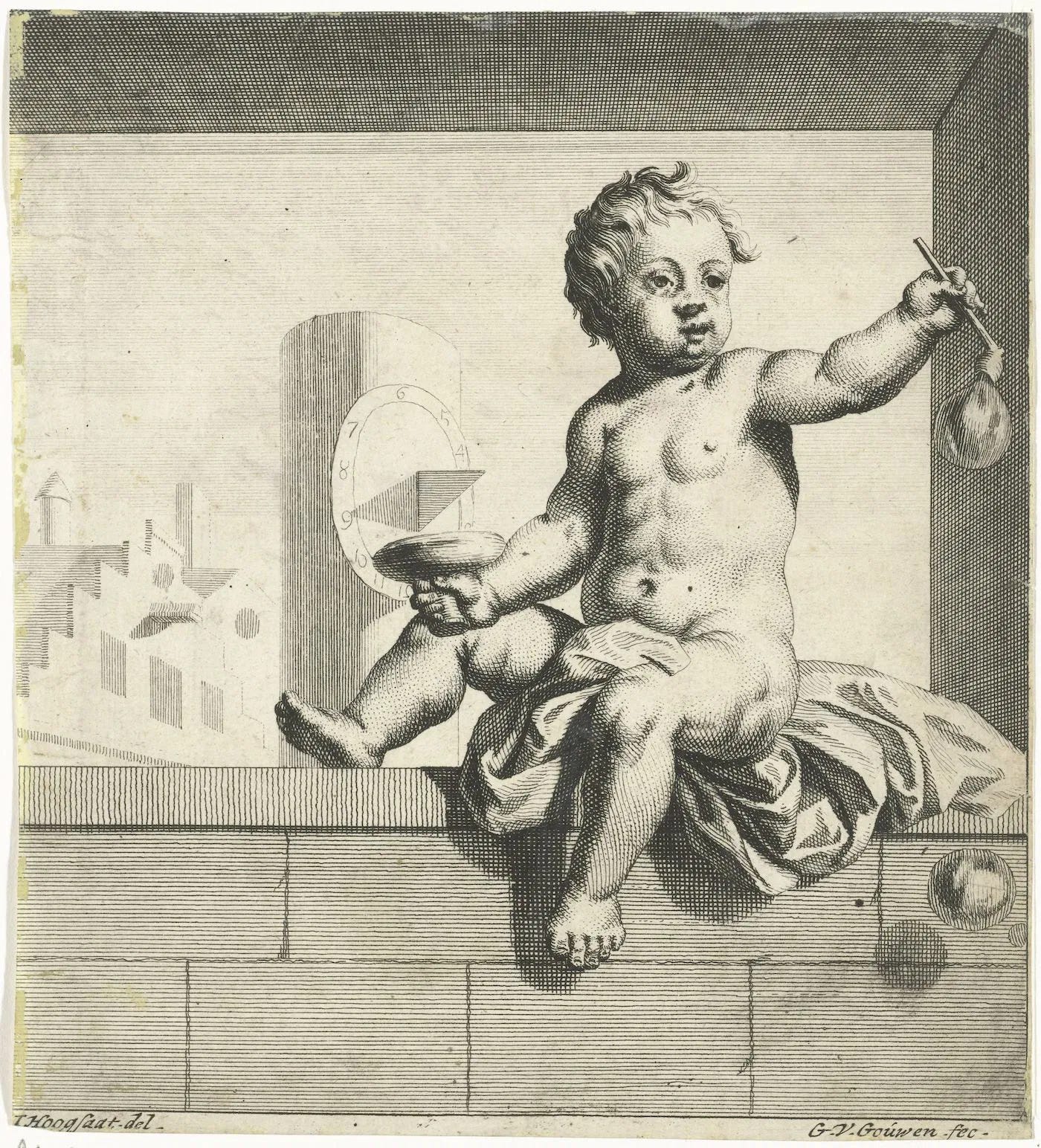
Reflecting back on my mini-essay at the top of this entry, I realized what happened: I completely disappeared. I was nothing but energy, laser-focused, unconsumed by nagging thoughts or bodily dysfunctions.
Stephen Nachmanovitch dedicates a chapter to this feeling of disappearing in his inspiring book “Free Play: Improvisation in Life & Art.”
He begins by saying, “For art to appear, we have to disappear.” He mentions the intense absorption children get as they play, fully concentrated. He says, “Mind and sense are arrested for a moment, fully in the experience. Nothing else exists.”
That’s how I felt speed walking down the forest trails, eyes attuned, hawk-like, looking for the next flower to pick. I was aware of my senses, but not really. It’s difficult to describe. Nachmanovitch bolsters this feeling by saying, “This lively and vigorous state of mind is the most favorable to the germination of original work of any kind.”
About disappearing, Nachmanovitch says:
The intensity of your focused concentration and involvement maintains and augments itself, your physical needs decrease, your gaze narrows, your sense of time stops. You feel alert and alive; effort becomes effortless. You lose yourself in your own voice, in the handling of your tools, in your feeling for the rules. The noun of self becomes a verb. This flashpoint of creation in the present moment is where work and play merge.
I think that’s why I had the idea of the experiment with self-portraits. I let my guard down and allowed myself to disappear so an idea could appear.
Creative Experiment to Try:
Go on a walk. Keep a color in mind as you collect objects, like flowers. Let your attention and senses attune to your surroundings and your chosen color. Create something from what you find.
What do you really need?
Code: CLARITY
Currently reading — “No one’s ever taught you how to make your relationships awesome, so here goes” by Lewis Corse
I love it when someone can untangle the complexities of emotions and basic human needs and distill teachings into clear, concise insights. That always gives me more clarity, so I can focus on other things. Like creating.
Lewis Corse does just that in an article titled “No one’s ever taught you how to make your relationships awesome, so here goes.”
The premise goes like this: relationships fail when needs aren’t met. The work of maintaining healthy relationships is on you to figure out what you really need. That takes some soul-searching.
Corse says:
Needs are not:“Text me every hour,”“Never talk to other people,”“Always agree with me.” Those are strategies, demands, and control attempts. Needs are the basic things humans require to feel safe, connected and respected.
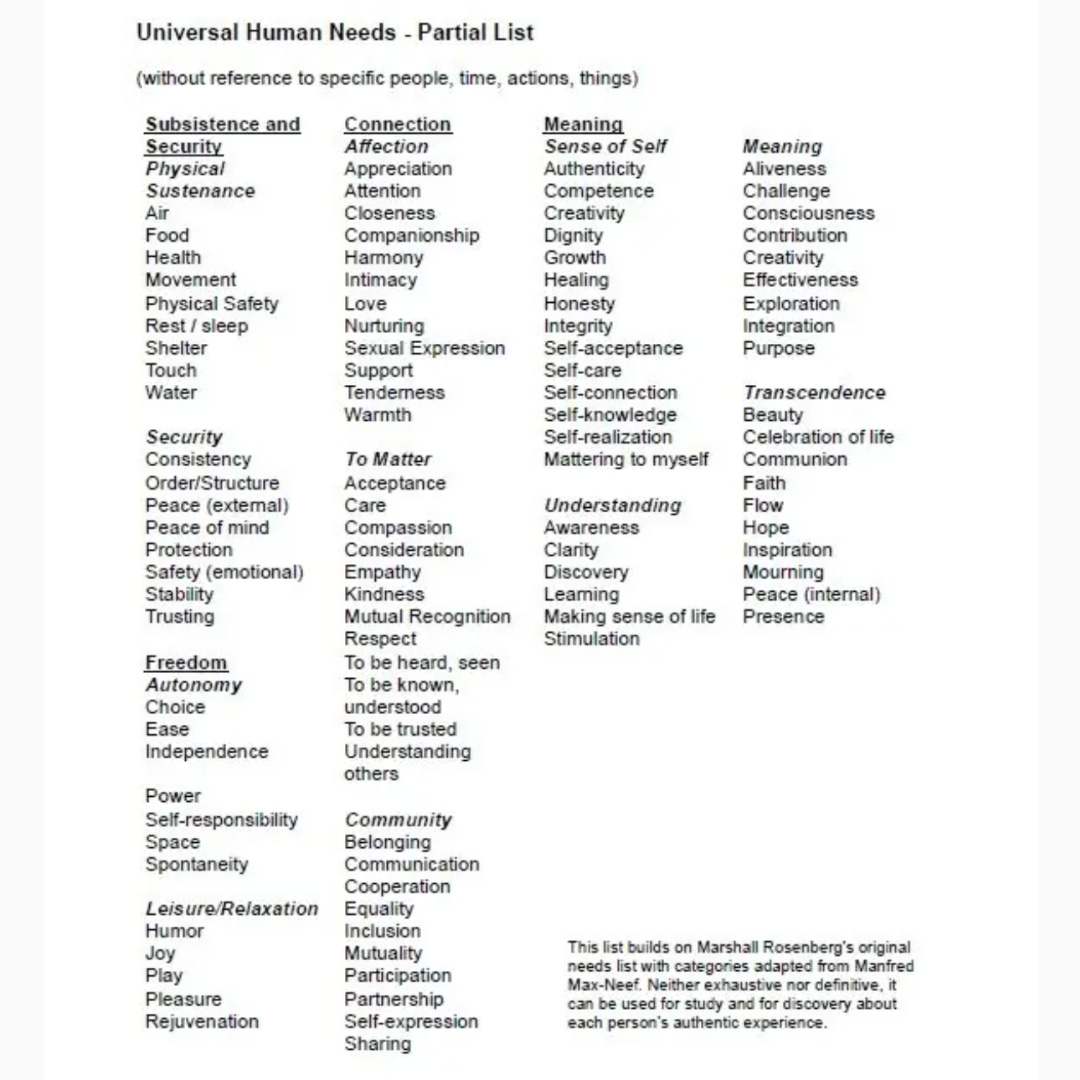
According to Corse, needs are supported by three factors: evolution, childhood, and identity. He includes this helpful list of Universal Basic Human Needs that you can refer to when you’re not sure what you need when you’re feeling a certain emotion. It says, “It can be used for study and for discovery about each person’s authentic experience.”
Creative Experiment to Try:
Bookmark the Universal Human Needs list. When you are unsure about an emotion you have, refer to the list. Complete this journal prompt: “What do I really need in this moment?”
Leaning into the numbness of pain to unlock creative energy
Code: CONDITION
Currently reading — “Whole Again: Healing Your Heart and Rediscovering Your True Self After Toxic Relationships and Emotional Abuse” by Jackson MacKenzie
The book “Whole Again” by Jackson MacKenzie has helped me internalize a belief: you have to lean into the pain sometimes for it to evaporate. This takes time. But once you can fully feel emotions in your body that have been trapped by numbing agents, creativity can thrive again.
MacKenzie taught me more about core wounds and the Protective Self that is created out of survival to make sure that wound is never shown to anyone. The Protective Self feeds off external measures of worth that can dictate our actions and skew our motivations.
MacKenzie says, “You need to understand that numbness only occurs when there is an intolerable amount of pain: rejection, shame, guilt, self-loathing, self-doubt, and fear. Our bodies are built for survival, and at some point your body decided that these feelings were detrimental to your survival.”
He continues:
Allow the numbness to be there, and understand that it wouldn’t be there unless it was protecting you from extremely overwhelming stuff. That’s the key step toward working beyond numbness: understanding that it shot up as a defense to protect you, because you simply were not able to cope with the emotions at the time. Knowing that your body and spirit did these things for your body paradoxically helps you soften your body.
Allowing myself to feel the numbness has been groundbreaking for me as I recover from past traumas, one day at a time.
Creative Experiment to Try:
Once a week, set a timer for 20-30 minutes and allow yourself to feel parts of your body that have been numbed to protect you. Allow emotions to surface and welcome them, wishing them well.